


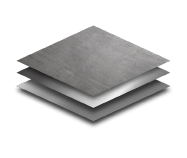


Discover in this guide the characteristics of the different metal sheets offered by John Steel: stainless steel, aluminum and steel. Thanks to the different criteria, find the metal cut that best suits your project.
1 - Dimensions
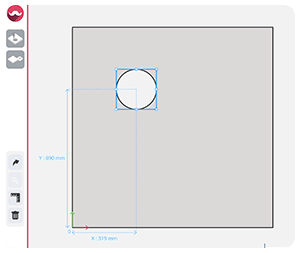
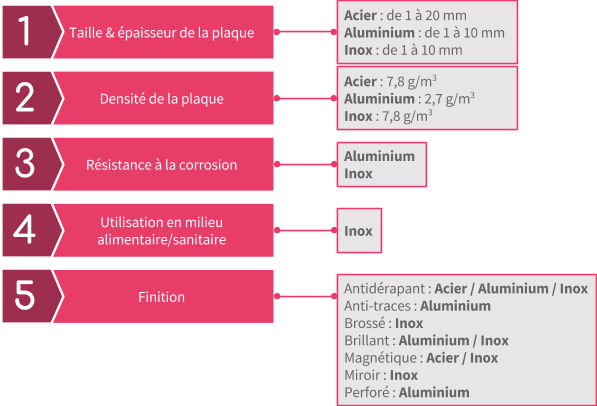
At John Steel, we offer sheets up to 1480 x 2980 mm depending on the material. In our configurator, minimum and maximum dimensions as well as available thicknesses are provided during your order.
In general, we offer cutting of aluminum or stainless steel sheets up to 10 mm thick, or steel sheets up to 20 mm.

2 - Strength
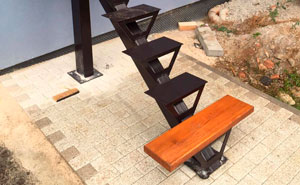
Steel, aluminum and stainless steel do not have the same mechanical strength or density. Steel and stainless steel are rather heavy materials. Depending on the selected thickness, they are recommended for horizontal use.
If you want a very strong and high-density material, for example to make a drain cover, you can choose anti-slip steel.
For a lightweight material that is easy to install vertically, choose thin aluminum.
3 - Use
Not all materials have the same properties. It is important to know them well to choose the best metal sheet for your project.
Aluminum and stainless steel resist corrosion, so they can be used in humid environments. Steel, however, must be treated against rust.
Stainless steel has food-grade and hygienic qualities. It is used in professional kitchens and also resists high temperatures and UV.
To create a magnetic board, you can choose steel (naturally magnetic) or ferritic stainless steel with its vintage mirror finish.
4 - Finish
Whether aesthetic or mechanical, there are different types of finishes for metal sheets.
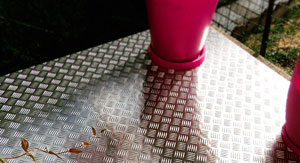
If you want a anti-slip metal sheet, you can choose between steel, aluminum and stainless steel. For an anti-fingerprint finish, ideal for door protection plates, choose aluminum. For a sleek design look, choose brushed stainless steel. For a shiny finish, use aluminum or stainless steel. The mirror effect is available in stainless steel. Finally, for ventilation grilles, choose perforated aluminum.